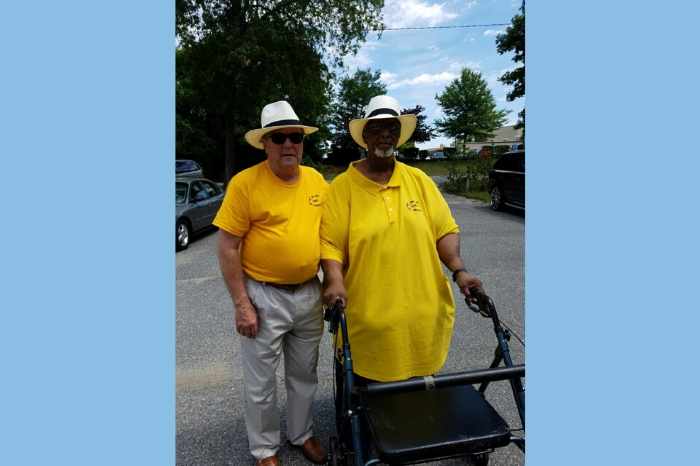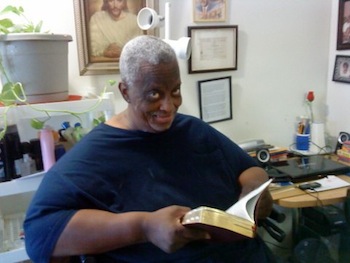
On November 4th, 2008, Ulysses Martin voted for the first time in his life. Ulysses was 57 years old. Ulysses and I had been partners in a student and tutor pairing for the past several years.
While Ulysees’ reading skills had grown much since he made the decision to learn to read, nothing so signified how much he had progressed as voting in his first presidential election. With that single act, he crossed over barriers, both real and imagined, and signaled to himself and the world around him that he had achieved something important, something long hoped for, something precious that he earned for himself and no one could take from him.
If Ulysses’ reading skills are still developing, his knowledge of world affairs, his interests, and his opinions were those of a mature 57-year-old man. We discussed and debated the campaign and news items of interest and importance. As the campaign progressed we discussed voter registration.
Ulysees was not a registered voter. He had never been a registered voter. If you cannot read, you are often excluded from many of the things people who read take for granted. Registering to vote became a part of our reading lessons and getting that first voter registration card a mark of special achievement. Voting in the election itself became the next great mountain waiting to be climbed and conquered.
After voting, we went to breakfast, and Ulysees told me, “We did it, our vote counted!” I believe at some level, that remark revealed a deeper, more fundamental connection to a community that he has often viewed from afar. In registering to vote and voting, Ulysees closed that gap and rightfully took a place in his community that he had long hoped for.
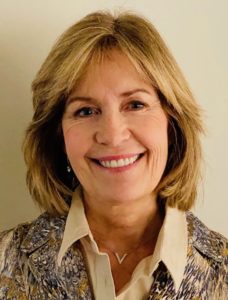
Tutor Stan Milesky
In April and May, the Literacy Council trained twenty-seven new volunteers from around the country to be virtual tutors for our students! These new volunteers have incredible teaching experience and enjoy virtual tutoring.
Final year med/law students, educators, and experienced tutors from NY, NJ, PA, WA, CA, MI, TX, and OH have volunteered to virtually instruct Literacy Council students seeking help. It is inspiring and encouraging to see such a large outpouring of kindness and generosity from across the U.S. towards our students.
Want to be a volunteer tutor? CLICK HERE for more information.
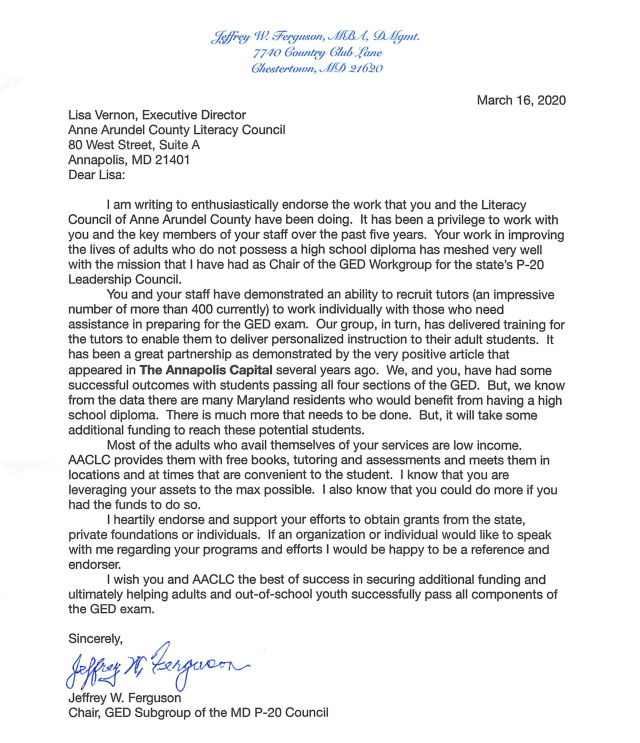
We were so proud to receive this letter of endorsement from Jeffry W. Ferguson. He is chairman of the GED Subgroup of the Maryland Governor’s P-20 Leadership Council. It shows support for our important work.

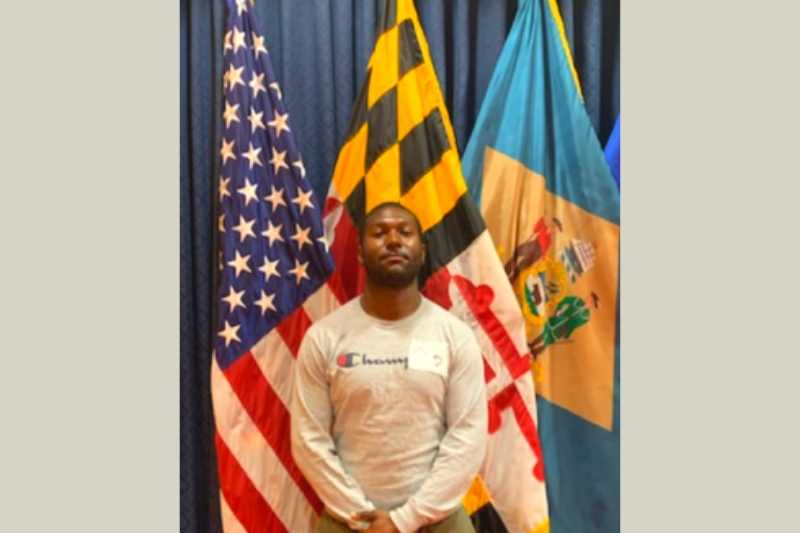
“I am pleased to report that Pernell Matthews passed the military ASVAB test today with a 34% improvement on his prior score! He now can enlist in his choice of all services and his score opens 5 potential service vocational training programs. Neither of us wants to close the match until we see what his next step will be and if I can help him with his training or enrolling in the Armed Forces University.
I have never had such a hard-working and focused student. He is a gift.”
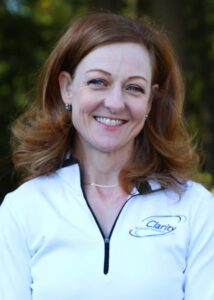
Tutor Susann Felton
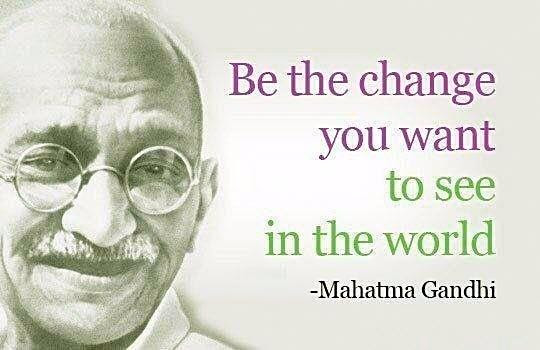
“Injustice anywhere is a threat to justice everywhere.”
Our nation mourns the brutal murder of an unarmed black man at the hands of a police officer in Minneapolis. I recommit myself and the Literacy Council to promoting racial equity and justice. We will continue to work hard to address challenges disproportionately affecting Black and other marginalized county residents through our free reading, writing, math, GED, and English tutoring program for low-income adults, and we welcome your feedback on how we can do better.
Sincerely,

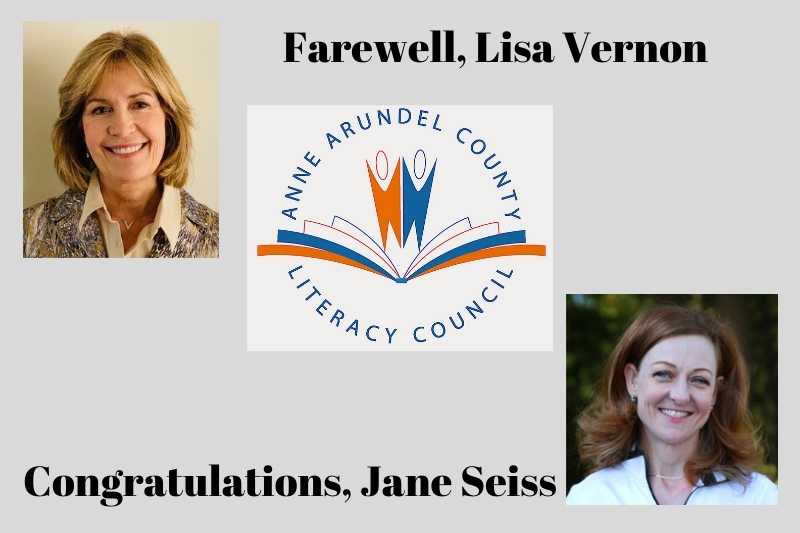
Lisa Vernon, Executive Director
Anne Arundel County Literacy Council
301-523-6750 (cell)
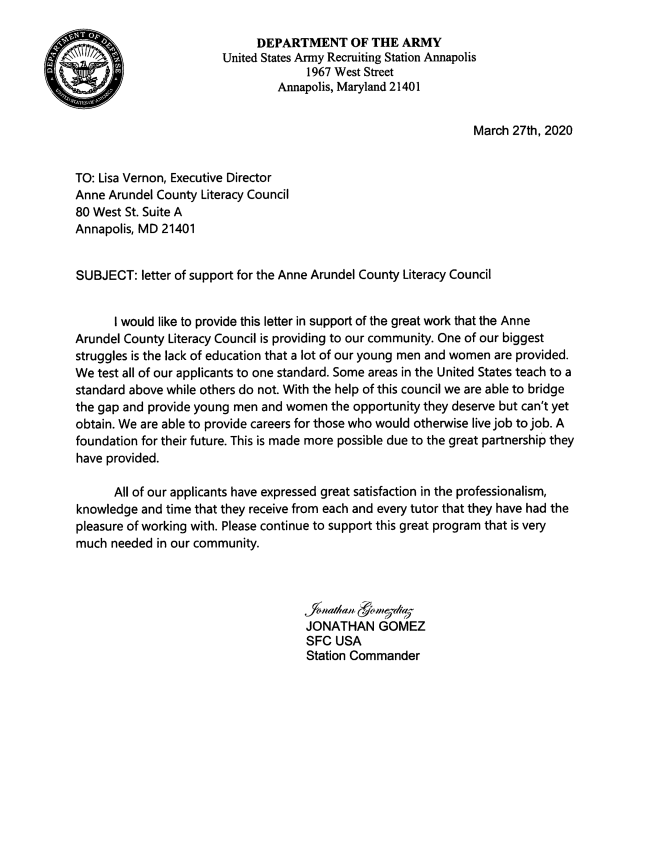
AACLC has set up a partnership with the Army Recruitment Centers in Annapolis and Glen Burnie to help their applicants pass the Armed Services Vocational Aptitude Battery (ASVAB) test; a prerequisite to enlist in the various branches of the Armed Forces including the Coast Guard and Police. Our tutors began preparing these applicants in high-school level Math, Science and English when the COVID-19 pandemic struck, shutting down our meeting locations including libraries and coffee shops. The only option left was to tutor students online.
Despite the shutdown and social distancing rules put in place for everyone’s safety, our volunteers have found ways to continue to help out-of-school adults pursue their dreams and further their education. They have been able to connect with their students once or twice a week to maintain continuity in their tutoring sessions. Video chat platforms such as FaceTime, Zoom or Google Hangouts have worked well to have a face-to-face conversation while homework and online resources are shared via email. GED tutor Susann Felton has begun tutoring her student Pernell Matthews, a young aspiring army recruit, via Zoom three to four times a week. They both have the same ASVAB textbook which makes it easier to communicate and share classwork and homework.
Pernell is very appreciative of the support he is receiving. His goal is to maximize his score to allow the best options when he enlists as soon as the quarantine is lifted. Pernell says, “Distance tutoring via Zoom is allowing me to maintain the pace and improve my knowledge base prior to taking the exam. I needed to brush up my math skills and increase my vocabulary. The discipline of tutoring is assuring both!”