
The neuroscience of deep reading will make you want to curl up with a great book. “Deep reading nurtures true empathetic connection to your fellow humans. In these difficult and lonely times, who couldn’t use a little more of that?”
Written by Jessica Stillman
CLICK HERE to read the whole article
AACLC tutors have a passion for reading, writing, and/or math, a love for learning, and a desire to make a positive difference in another person’s life and in their community. Tutor Cheri Gerard, who took the March 16th spring tutor training as a refresher course and is soon to be matched with both an English Language Learner (ELL) and a math student, beautifully illustrates the passion, integrity, and talents of AACLC’s tutors.
Cheri was trained as an ELL teacher by Peace Corps in 1978 and served as an English teacher in Zaire from 1978 through 1981. Additionally, she lived in Africa for 14 years, speaks French and Kikongo, and understands the difficulties that folks experience in acclimating to a new country, culture, and language. She has also studied Swahili, Kipende, Lingala, Luganda, Russian, and Spanish!
Math has always been one of Cheri’s favorite subjects, and she enjoys making math fun for others. Cheri was a budget analyst for the federal government (9 years) and then for the State of Maryland (20 years).

Read the whole article: “It’s Important To Read Every Day” by David Bruce Smith Publications
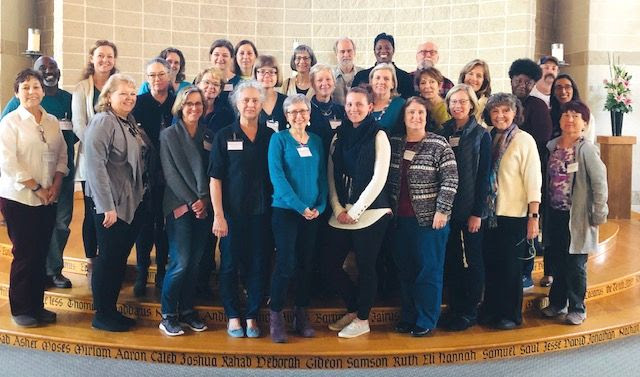
AACLC welcomes these talented new tutors who were trained and matched with students at our Spring 2019 Tutor Training.
A big thank you also goes out to tutor trainer coordinator Jill Mischo along with trainers Dr. Perinaaz Gandhi, Susann Felton, Bob and Mary Anne Stoner, Anita Ewing, Phil Tawes, Emily Clement, Michael Green, Kathy Lotterbach, Ellen Riley, Jane Seis, JoAnn Cook, former student LaToya Saunders, and presenter NEDP coordinator Susan Peters.
Please note that our Follow-On training is scheduled for April 27th from 9-11 a.m. at Woods Memorial Presbyterian Church.
___________________
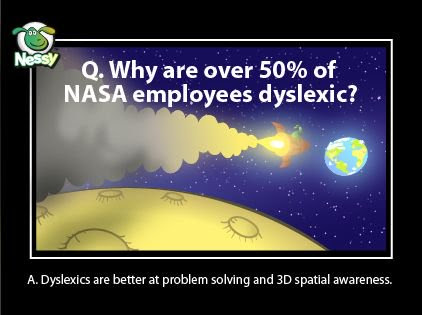
Come learn about dyslexia and some strategies to help your students
living with dyslexia.
Woods Memorial Presbyterian Church
Saturday, March 30th
9:00 a.m. to noon

A fabulous buffet dinner will be followed by a short but exciting program to celebrate our 247 student/tutor matches and our 42nd anniversary serving Anne Arundel County County Executive Steuart Pittman will be our keynote speaker.
Please RSVP below as soon as possible and also print out the invitation to give to your student.

“The more that you read, the more things you will know. The more that you learn, the more places you’ll go.”
~ Dr. Seuss
In honor of Dr. Seuss’ birthday, March is designated as National Reading Month – a month to motivate Americans of all ages to read every day. The article “10 Benefits of Reading: Why You Should Read Every Day” explains why reading can calm nerves, increase vocabulary, improve memory, and so much more!
Please grab your calendar and make note of several upcoming events. There is a Dyslexia workshop opportunity on Saturday, March 30th from 9 a.m. – noon, and a workshop for our English Language Learner (ELL) tutors on Tuesday, March 20th from 6-8 p.m. Both workshops will be held at Woods Memorial Presbyterian Church in Severa Park. If you are interested in attending either of these workshops, please contact tutor coordinator Jane Seiss at jane.seiss@gmail.com as soon as possible to reserve a seat.
We are already at capacity with 200 reservations for our April 25th Annual Appreciation dinner! If you have not yet reserved a seat and would like to attend, a wait list has been started in case of possible cancellations. Please contact jane.seiss@gmail.com for more information.
Kind regards,
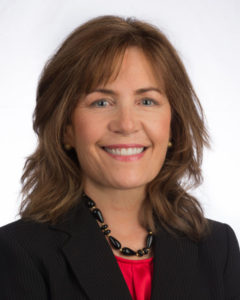
Lisa Vernon, Executive Director
Lisa Vernon, Executive Director
Tutor:
A common issue in the tutor reporting so far this month is short vowel sounds. Does anyone have ideas in teaching short vowel sounds and helping students retain that knowledge???
Sarah:
I always want to know what my student is really thinking about the problem he or she is having when trying to read. There is an AWESOME website, Reading Rockets, which has a tool called “Target the Problem.” Questions and answers are given from a student’s, teacher’s, and parent’s point of view in all the areas of reading: word decoding, fluency, reading comprehension, sound awareness, vocabulary, etc. You can use this tool to understand the reading difficulties of students of any age.
I believe in the whole brain concept of teaching the brain to associate sounds, words, and pictures together. When a student struggles to put sounds together, it takes all of the energy out of trying to read (and some students forget what they are trying to do!). I like using pictures to convey meaning, and while some students like the movement of tapping out /sounding out words… others don’t understand that concept. (If it’s a pig, show the picture of a “pig” and say PIG!)
Has your student’s hearing and vision been checked, lately? Some students with learning disabilities may need glasses or hearing aids or other directions toward understanding the printed word.
I just learned the differences in short and long vowel sounds about two years, ago. Long sounds are heard when the names of letters of the alphabet are spoken aloud. Direct the student’s focus to the short sounds of the vowels: a, e, i, o, u, and sometimes y by using one syllable words, such as: at, egg, big, dog, fuss, and myth. To avoid confusion, do not mix short vowel sounding words and long vowel sounding words together in the same lesson, if possible. (Don’t teach bit with bite; con with cone; can with cane, unless you are sure your student has mastered the difference between short and long vowel sounds!)
I would practice this with two or three words that use one ‘short’ sound, like bat, fat, sat… or bed, fed, red. Let your student gain the confidence of learning and hopefully remembering a few new words to understand the pattern of the concept.
You can also use pictures to teach abstract words, like: to, of, a, the …. a piece of cake; to the school…. Dr. Seuss is great for rhyming, blending, and discussing the pictures one sees in the mind. You want to teach the student to see the picture associated with the sound in her mind. And teach Word Families… if you teach pig, also, teach: big, dig, fig, rig, twig, and wig…
Create a Word Wall to list words with short vowel sounds in columns: a – apple, at, bat, Al; e– egg, beg, Peg; i– igloo, itchy, big, Bill; o– ox, owl, Bob; u– umbrella, nut, Guss and; y– gym, myth, Yvette. Use Word Families… at, bat, cat, mat, pat, rat…. to repeat the short vowel over and over.
Think of people’s names that use short vowel sounds to help your student associate the short sound to a name that is familiar to him or her. Check for student understanding… ask them “What is meant when a word has a short vowel sound? What is meant when a word has a long vowel sound?”
“Can you hear the difference?”
Take the time to ask questions to find out what your student understands. It is important to know what he or she is thinking. We all have different learning styles in the way we process information.
For more tutors’ tools and resources please visit the Anne Arundel County Literacy Council ICANREAD.ORG website.
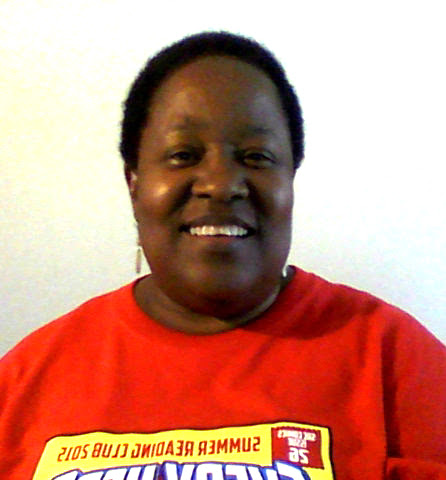
Sarah Gardner
